Low-Energy and Passive Houses
As of 2017, only passive houses are officially permitted to be built in Luxembourg. The number of low-energy and passive houses is also steadily increasing in Germany. This naturally raises the question: Does a wood-burning stove or fireplace fit into my living concept?
Builders or owners of low-energy or passive houses often believe that a fireplace or wood-burning stove can lead to overheating of the living space or compromise the airtightness of the house.
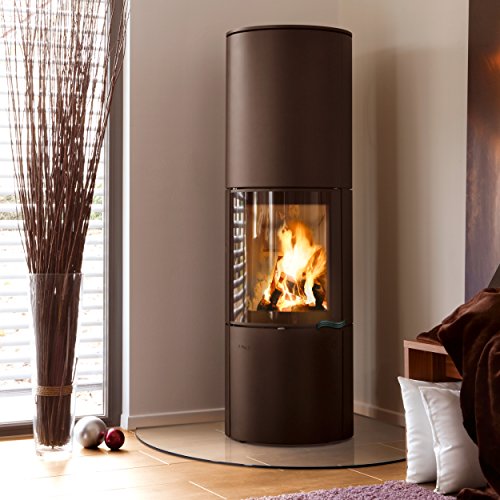
For precisely these types of houses, there are specially designed stoves and fireplace systems that make it possible to enjoy a cozy fire even in these living concepts.
Explanation:
In low-energy and passive houses, fireplaces and stoves must be operated independently of the room air supply. The combustion air required for this must not be drawn from the room itself, but must be supplied from outside.
Due to the airtight construction, a dangerous negative pressure can develop in the building within minutes. This can lead to exhaust gases entering the living space during combustion. This can be prevented by installing a safety device in the form of a negative pressure monitor. This device detects the negative pressure in the building and can shut off the ventilation system, allowing the pressure to equalize immediately and eliminating the danger.
For this to work, all fireplaces and stoves must be designed to be permanently airtight. This airtightness is achieved either through external dampers that regulate the combustion air intake and exhaust gas flow, or by choosing a DIBt-certified stove or insert.
With DIBt-certified stoves or inserts, external dampers and a safety device (negative pressure monitor) are not required.
We would be happy to advise you personally on this topic in our showroom.